Social science departments welcome 12 new faculty for 2007-08
September 5, 2007Media contact: Deborah Baum 401-863-2476
Twelve new members of the regular faculty are beginning work in the social sciences at Brown during this academic year: Francoise Hamlin in Africana Studies; Samuel Zipp in American Civilization and Urban Studies; Paja Faudree in Anthropology; Hsin-I Tseng in East Asian Studies; Kenneth Chay, Geoffroy de Clippel, Kfir Eliaz and Marilda Sotomayor in Economics; Deborah Rivas-Drake and Tracy Steffes in Education; and Gianpaolo Baiocchi and Mark Suchman in Sociology.
See also new faculty in arts and humanities, life sciences and physical sciences.
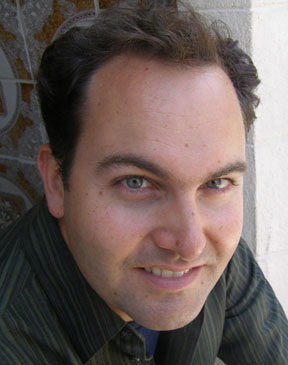
Samuel Zipp
Assistant Professor of American Civilization and Urban Studies
If you have any questions about 20th-century New York, Sandy Zipp is probably the person to ask. His primary work is a history of urban renewal in the seminal first 20 years after World War II, focusing on four areas: Stuyvesant Town, the United Nations Headquarters building, the Lincoln Square project (home of Lincoln Center for the Performing Arts), and public housing in East Harlem.
He "tracks the rise of the idea of urban renewal ... and the defense of locality and neighborhood life, finding both the hopeful vision at the heart of urban renewal" and the fact that "Many of the places that were seen as wasteland perhaps were not so disposable."
He's currently turning this idea (once a dissertation) into a book for Oxford University Press, tentatively called Manhattan Projects: The Rise and Fall of Urban Renewal in Cold War New York. Some of his thoughts on Stuyvesant Town were published in a New York Times op-ed titled "A Landmark's Middle-Class Myth."
How did Zipp become so fascinated by cities? Partly it was growing up in Washington, D.C., but his interest really took hold through a job as a bike messenger. He says zipping along the streets of San Francisco gave him a real appreciation for urban geography and the need to learn a city's social, political, and economic structure from the inside out. He even brings music into his maps of these cities - and will teach a class about the interaction between urban environments and the music that springs to life from the streets. (His undergraduate thesis examined punk music's rise in Washington.)
Zipp holds a Ph.D. in American studies from Yale, a master's in American studies from George Washington University, and a B.A. from Northwestern. He has been awarded a Rockefeller Archive Center research grant, a Franke Interdisciplinary Fellowship from Yale, and a Presidential Fellowship from George Washington.
In sum, Zipp calls himself a "cultural and political historian of the post-World War II United States, interested in urbanism and issues of the built environment." From the history department at the University of California-Irvine, he joins Brown as an assistant professor in American civilization and urban studies, hired through the Urban Studies Program.